The Habit Loop

Every habit — good or bad — follows the same three-step neurological pattern. Understanding it is the first step to mastering it.

🔔

Cue

The trigger that initiates the behavior — a time, place, emotion, or preceding action

⚙️

Routine

The behavior itself — mental, physical, or emotional. Keep it small and specific.

🌟

Reward

The benefit your brain receives. It teaches your mind this loop is worth remembering.

🔁

Repeat

Repetition strengthens the neural pathway until the loop becomes automatic.

Six proven approaches

Each method targets a different aspect of habit formation. Use one or combine several for a personalized system.
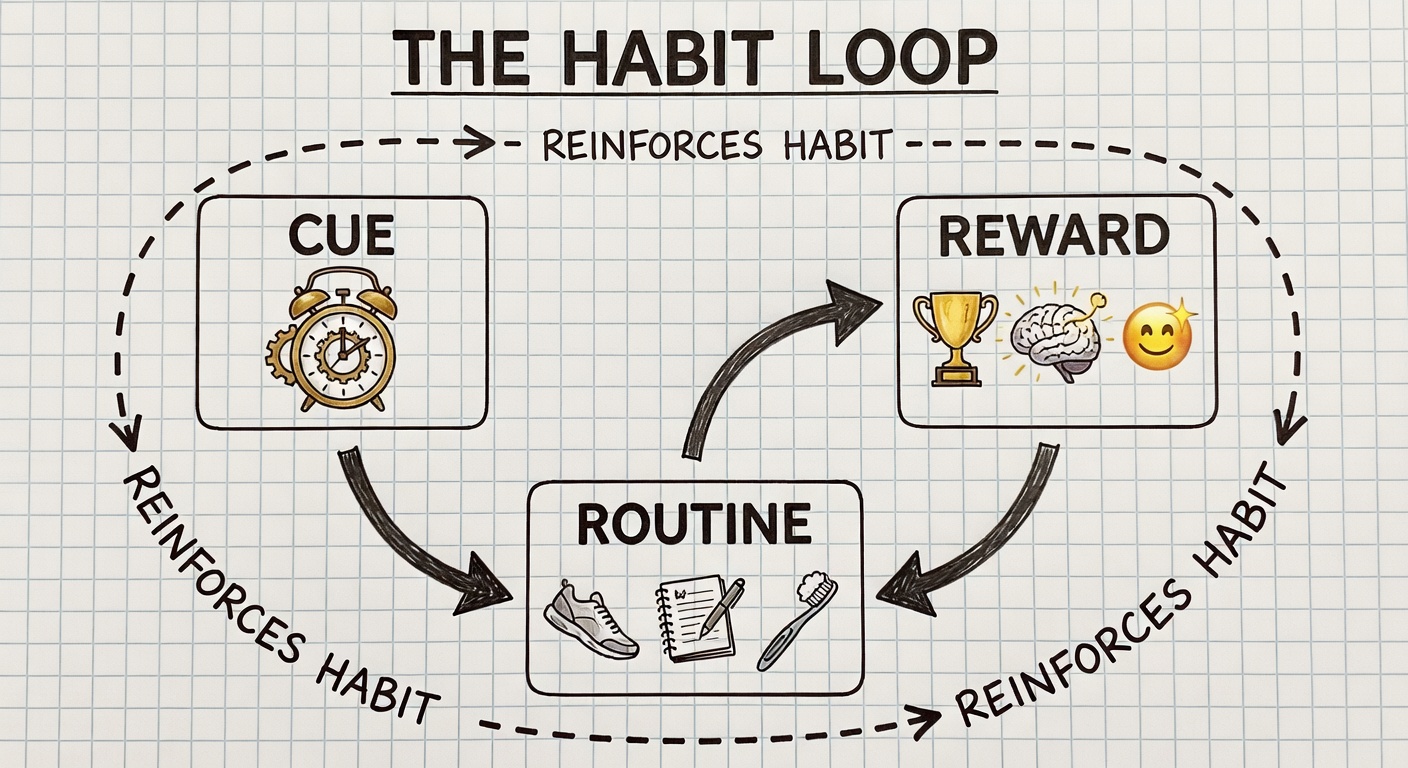
Habit loop cycle diagram
Foundation

Habit Loop Design

Map your existing habits to identify their cues and rewards. Redesign the routine while keeping the same neurological structure.

Download Template →
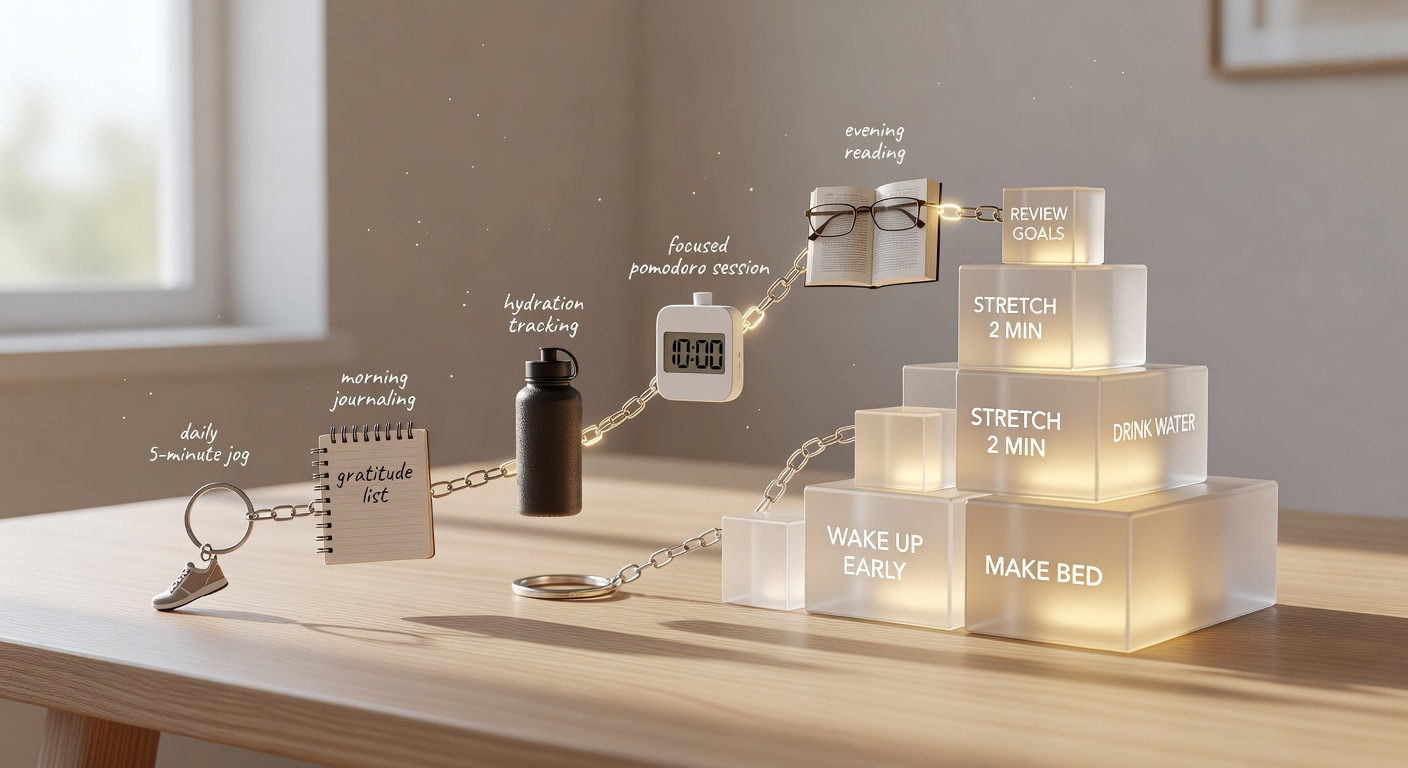
Habit stacking notebook
Intermediate

Habit Stacking

Link new habits to existing anchors using the formula: "After [CURRENT HABIT], I will [NEW HABIT]." Leverage momentum already in your day.

Download Template →
Advanced

Implementation Intentions

Specify exactly when, where, and how you'll perform a habit. Research shows this doubles follow-through rates compared to vague goals.

Download Template →
Mindset

Two-Minute Rule

Scale any habit down to under two minutes. Want to read? Open the book. Want to meditate? Sit and breathe for one breath. Start impossibly small.

See Examples →
Consistency

Never Miss Twice

Missing once is an accident. Missing twice is the start of a new habit. The key isn't perfection — it's returning quickly after you slip.

See Examples →
Tracking

Visual Progress Systems

Don't break the chain. Paper trackers, bullet journals, or Billk's digital templates — visibility transforms abstract goals into satisfying streaks.

Get Templates →
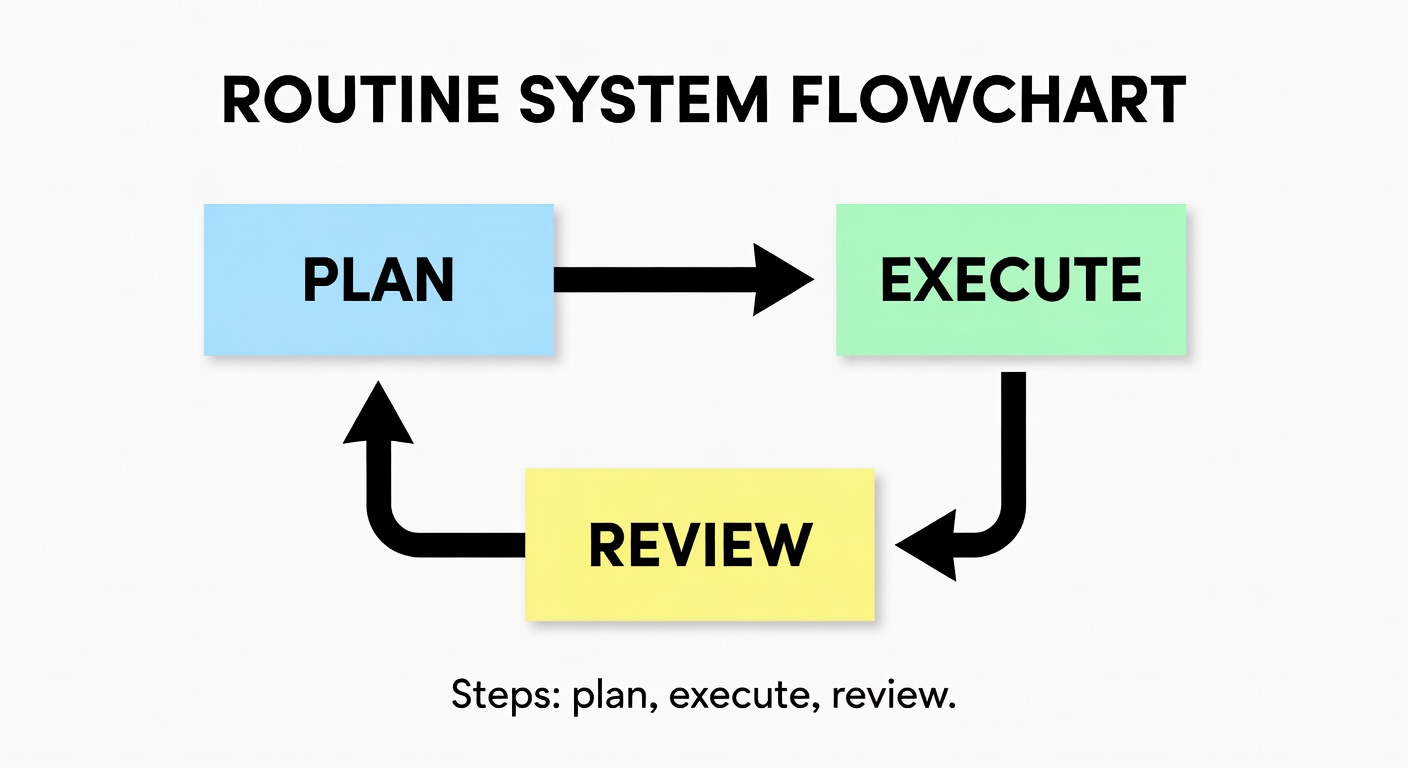
Routine system flowchart

System design over
willpower alone

Most people fail at habits not because they lack discipline, but because they rely on motivation — a finite, unpredictable resource. Billk methods focus on removing friction from your environment so good behaviors happen almost automatically.

  • Reduce the steps required to start a habit to near zero
  • Redesign your physical and digital spaces as cue generators
  • Build accountability through visible daily tracking
  • Use reward prediction to sustain long-term motivation
  • Schedule weekly reviews to adapt your system as life changes
Browse Templates →

Methods FAQ

How many habits should I start with?

Start with no more than 2–3 habits. The goal is to build the routine of tracking, not to overhaul your entire life at once. Adding more habits becomes easy once the tracking system itself becomes automatic.

How long does it really take to form a habit?

Research from UCL suggests 18 to 254 days depending on the habit and the person, with an average of 66 days. The "21 days" figure is a myth. Billk's approach focuses on consistency, not a fixed timeline.

What if I miss a day?

Miss one day — it happens. The critical rule: never miss twice in a row. Missing once has almost no statistical impact on habit formation. Missing consistently is what breaks the loop. Return the next day without judgment.

Can I use these methods digitally or do I need paper?

Both work equally well. Research slightly favors handwriting for deeper commitment, but the best tracker is the one you'll actually use. Our templates come in both PDF (printable) and digital formats.

Is Billk backed by science?

Yes. Our methods draw from peer-reviewed research in behavioral psychology, neuroscience, and habit formation — including work by BJ Fogg, James Clear, Charles Duhigg, and Phillippa Lally. We translate that science into practical, everyday tools.